
How to authenticate genuine sterling silver jewelry
Counterfeit and misrepresented silver jewelry costs buyers, retailers, and resellers real money every year. A piece stamped “925” can still be silver-plated brass, a low-grade alloy, or outright fake, and the difference is almost impossible to spot with the naked eye alone. Whether you’re stocking inventory for your boutique, sourcing wholesale pieces for resale, or choosing a meaningful gift, knowing how to verify what you’re actually buying protects your investment and your reputation. This step-by-step guide walks you through every reliable method, from simple visual checks to professional XRF testing, so you can shop with total confidence.
Table of Contents
- What is sterling silver and why authenticity matters
- Tools and materials for authenticating sterling silver
- Step-by-step process to authenticate sterling silver jewelry
- Common mistakes and how to avoid them
- Our take: The real-world challenge of verifying sterling silver jewelry
- Shop authentic sterling silver jewelry with confidence
- Frequently asked questions
Key Takeaways
| Point | Details |
|---|---|
| Trust lab tests | Professional tests like XRF accurately verify sterling silver purity without harming your jewelry. |
| Demand documentation | Authentic jewelry should have clear hallmarks and verifiable testing reports, especially when buying online. |
| Avoid common mistakes | Don’t rely solely on appearance or markings; use reliable methods and avoid damaging tests. |
| Shop from reputable sources | Buy from sellers who prioritize transparency and back their products with proper authentication. |
What is sterling silver and why authenticity matters
Sterling silver is a specific silver alloy, not pure silver. Genuine sterling silver contains 92.5% pure silver and 7.5% other metals, typically copper. That precise ratio gives it the strength needed for wearable jewelry while preserving the bright, lustrous finish that makes silver so desirable. You’ll often see it stamped as “.925” or “925,” which is the internationally recognized hallmark for this standard.
Not all silver-looking jewelry meets this standard, though. The market includes several types that are easy to confuse:
- Sterling silver (.925): 92.5% pure silver, durable and tarnish-resistant with proper care
- Silver-plated jewelry: A thin silver coating over a base metal like brass or copper; the coating wears away over time
- Silver-filled jewelry: A thicker silver layer bonded to a base metal, more durable than plating but still not sterling
- Nickel silver or German silver: Contains zero actual silver; it’s a copper-nickel-zinc alloy with a silver appearance
- Fine silver (.999): Nearly pure silver, too soft for most jewelry applications
Why does this distinction matter so much? Resale value, durability, and skin safety all depend on it. A silver-plated piece may sell for a fraction of the price of genuine sterling, but if it’s misrepresented as sterling, you’re losing money and trust. Retailers who unknowingly stock misrepresented pieces damage their brand credibility with customers. For gift buyers, authenticity is a matter of honoring the occasion with something genuinely valuable.
XRF technology can distinguish sterling silver from other alloys and plating based on elemental signatures, which is why professional jewelers rely on it for high-confidence verification. For everyday buyers, understanding the basics of what sterling actually is forms the foundation for every authentication step that follows.
When you’re evaluating a piece like a genuine cubic zirconia ring or a polished open cuff bracelet, knowing the standard you’re measuring against makes all the difference.
Tools and materials for authenticating sterling silver
With a clear understanding of what sterling silver is, let’s look at what you’ll actually need to verify it. Authentication doesn’t always require a lab. The right combination of tools, matched to your situation, gives you a reliable picture of what you’re holding.
| Tool | Cost range | Best for | Limitations |
|---|---|---|---|
| Magnifying glass (10x loupe) | $10–$30 | Hallmark inspection | Can’t confirm actual purity |
| Acid test kit | $15–$50 | DIY purity check | Slightly destructive, needs skill |
| Digital precision scale | $20–$60 | Weight comparison | Doesn’t confirm silver content |
| Neodymium magnet | $5–$15 | Quick base metal check | Not definitive on its own |
| XRF (X-ray fluorescence) device | $15,000+ or lab service | Professional purity analysis | Cost and access |
Each tool has a role. A magnifying glass helps you read hallmarks clearly without guessing. A digital scale lets you compare actual weight against expected weight for a piece of that size, since genuine sterling has a specific density. A strong magnet is a quick screening tool: sterling silver is not magnetic, so if a piece pulls toward the magnet, you’re likely dealing with a ferrous base metal underneath plating.
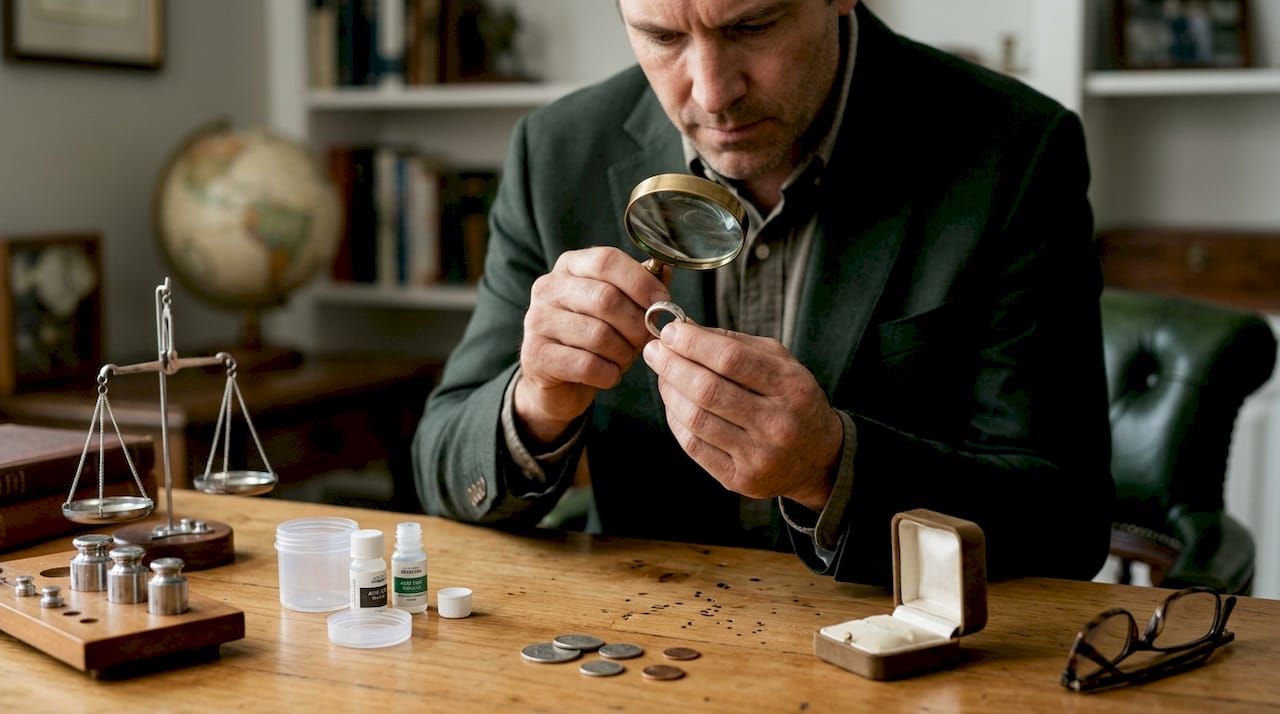
The acid test kit is the most accessible DIY method for confirming silver content. It uses nitric acid to produce a color reaction based on the metal’s composition. A cream or gray color on the scratch indicates genuine sterling. However, the test requires care because the acid can damage a piece if applied incorrectly.
XRF (X-ray fluorescence) technology sits at the top of the authentication hierarchy. XRF is non-destructive and can distinguish sterling silver from other silver alloys and plating with precise elemental readings. Professional jewelers and labs use handheld XRF devices to scan a piece in seconds and produce a full elemental breakdown. You don’t need to own one; many jewelers offer XRF testing as a service for a modest fee.
Pro Tip: If you’re a retailer sourcing wholesale inventory, budget for at least one professional XRF test per new supplier or product line. It’s a small cost compared to the risk of stocking misrepresented pieces.
For a beautifully crafted piece like a mesh bracelet with freshwater pearls, combining a hallmark inspection with a seller’s XRF documentation gives you layered confidence before committing to a bulk order.
Step-by-step process to authenticate sterling silver jewelry
Armed with the right tools, here’s how to put them to work systematically. Follow these steps in order for the most reliable result.
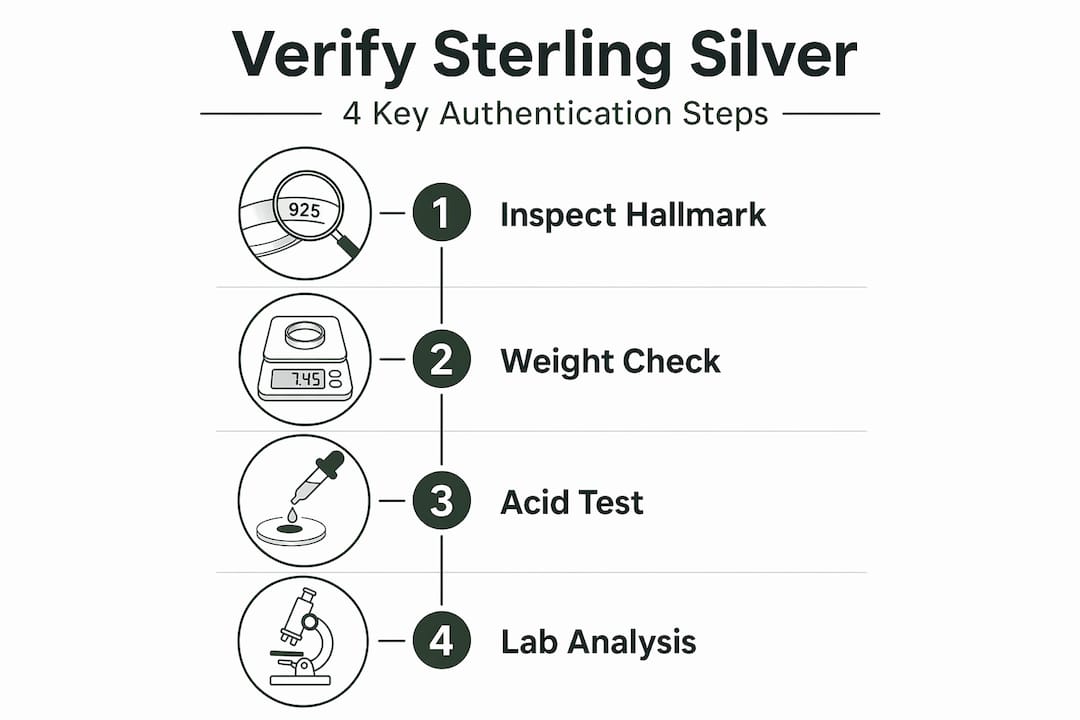
- Inspect the hallmark or stamp. Look for “.925,” “925,” “S925,” or “Sterling” stamped on the piece. Use your loupe to read it clearly. The stamp should be crisp and evenly pressed, not smudged or faded.
- Check the overall finish and weight. Genuine sterling silver has a bright, cool-toned luster. It feels noticeably heavier than plated or alloy pieces of the same size. Compare the piece to a known sterling item if possible.
- Apply the magnet test. Hold a strong neodymium magnet close to the piece. Sterling silver shows no magnetic attraction. Any pull toward the magnet suggests a ferrous base metal.
- Perform an acid test (if needed). Scratch a small, inconspicuous area of the piece on a testing stone, then apply a drop of nitric acid solution. A cream or gray color confirms silver content consistent with sterling.
- Request or commission XRF testing. For high-value purchases or wholesale sourcing, professional labs and jewelers use XRF to provide documentary proof of silver purity. Ask for the test report.
- Review documentation from the seller. Reputable sellers provide certificates of authenticity, material specifications, and test reports. Scam prevention guidance emphasizes that clear photos of hallmarks and verifiable testing claims are essential markers of a trustworthy seller.
- Verify online listings carefully. When buying online, request close-up photos of hallmarks from multiple angles. Look for sellers who proactively share material specifications and testing documentation rather than using vague terms like “silver-tone” or “silver-colored.”
Here’s a quick reference for what each test result tells you:
| Test | Positive result | What it confirms |
|---|---|---|
| Hallmark inspection | “.925” or “Sterling” stamp | Claimed standard (not guaranteed) |
| Magnet test | No attraction | Not a ferrous base metal |
| Acid test | Cream or gray color | Silver content present |
| XRF analysis | 92.5% Ag reading | Confirmed sterling purity |
| Documentation review | Test report provided | Seller transparency and accountability |
Pro Tip: Never rely on a single test alone. Layer two or three methods for confidence. A hallmark plus XRF documentation plus a reputable seller is the gold standard combination.
Pieces like the authentic clasping hands bracelet and the handcrafted floral bracelet from trusted artisan sources come with clear material specifications, making the documentation step straightforward.
Common mistakes and how to avoid them
Even with good tools and a solid process, mistakes happen. Here are the most common errors buyers and retailers make when authenticating sterling silver, and how to sidestep each one.
- Assuming every “925” stamp is genuine. Stamps can be faked. A fraudulent stamp is easy to press onto a base metal piece. Always back up a stamp with at least one additional test.
- Relying only on visual checks. Color and shine can be replicated with plating. A piece that looks identical to sterling may be brass underneath. Visual inspection is a starting point, not a conclusion.
- Applying acid tests incorrectly. Using too much acid, testing on a visible surface, or skipping the scratch step can damage a piece and still produce an unreliable result. Always test on a hidden area and follow kit instructions precisely.
- Ignoring documentation requests. Skipping the step of asking for test reports or certificates is one of the most costly shortcuts. Absence of verifiable testing documentation is a clear risk signal when shopping online.
- Trusting vague product descriptions. Terms like “silver-tone,” “silver-colored,” or “silver-finish” are not the same as sterling silver. If a listing doesn’t explicitly state “.925 sterling silver” and back it up with documentation, treat it with caution.
“The most expensive mistake in jewelry buying isn’t paying too much for a genuine piece. It’s paying any price for a fake one.”
Pieces like genuine stone chip earrings from reputable artisan sources come with clear material labeling. Comparing how transparent a seller is about materials and testing against this standard quickly separates reliable sources from risky ones. When a seller proactively offers stamped S925 silver jewelry with full specifications, that transparency itself is a quality signal.
Our take: The real-world challenge of verifying sterling silver jewelry
Here’s something the standard authentication guides don’t tell you: even experienced jewelry buyers get fooled. Not because they skipped the steps, but because the market has become sophisticated enough that surface-level checks no longer cut it.
We’ve seen it happen repeatedly in the wholesale space. A retailer sources a batch of “sterling” pieces from a new supplier, the stamps look right, the weight feels close, and the price seems reasonable. Then a customer returns a piece six months later because it turned green. That’s a base metal showing through worn plating. No hallmark inspection would have caught it without additional testing.
This is why we believe so strongly in layered verification. Visual checks are a filter, not a verdict. The acid test adds a layer. XRF testing adds certainty. And seller documentation ties it all together. Each layer catches what the previous one might miss.
Technology is genuinely changing the game here. Handheld XRF devices are becoming more accessible, and many professional jewelers now offer testing as a standalone service. For retailers buying in volume, commissioning XRF testing on a sample from each new batch is a practical and cost-effective safeguard.
Seller transparency is equally important, and it’s underrated as a trust signal. A seller who proactively shares hallmark photos, material specifications, and test documentation isn’t just being thorough. They’re showing you that they stand behind what they sell. That’s the standard we hold ourselves to at Providence Wholesale Silver, and it’s the standard you should expect from every supplier.
When you source a trusted floral bracelet or any artisan piece from us, you’re getting full material transparency alongside the craftsmanship. That combination is what genuine confidence in a purchase actually looks like.
Shop authentic sterling silver jewelry with confidence
You now have the knowledge to authenticate sterling silver at every level, from a quick hallmark check to professional XRF verification. The next step is putting that knowledge to work with a supplier who makes it easy.
At Providence Wholesale Silver, every piece we carry is crafted to the .925 sterling silver standard, with clear material specifications and transparent sourcing. Whether you’re looking for a stunning mesh bracelet with freshwater pearls for a retail display or handcrafted stone chip earrings to add to your gift collection, you’ll find pieces backed by the documentation and craftsmanship that authentication requires. Explore our full range of artisan sterling silver pieces at Providence Wholesale Silver and shop knowing exactly what you’re getting.
Frequently asked questions
How can I tell if sterling silver jewelry is genuine without professional testing?
You can check for hallmarks, accurate weight, and consistent appearance, but for definitive proof, nothing replaces lab-level analysis. XRF reliably distinguishes sterling from other alloys and provides precise elemental readings that visual checks simply cannot match.
Is an acid test harmful for sterling silver jewelry?
An acid test can damage a piece if the acid is applied directly to a visible surface or used in excess. Always perform the test on a hidden area and follow the kit instructions carefully to minimize any risk.
Why is documentation so important when buying online?
Clear photos of hallmarks and verifiable test reports protect you from receiving misrepresented pieces. Transparency and documentation are the most reliable indicators that a seller is accountable for what they’re selling.
Can professional lab tests like XRF be used on all types of jewelry?
Yes. XRF is non-destructive and suitable for most jewelry types, including rings, bracelets, earrings, and necklaces, making it a versatile and trustworthy option for confirming silver composition without damaging the piece.
What are the risks of buying sterling silver from non-reputable sellers?
You risk receiving silver-plated or low-grade alloy pieces sold as genuine sterling, which lose value quickly and may cause skin reactions. Absence of testing documentation from a seller is a clear warning sign to walk away.
Recommended
- Sterling silver mans AAAA grade cubic zirconia ring – Providence Wholesale Silver
- Sterling silver “Mariage,faith,frendiship” clasping hands Bracelet – Providence Wholesale Silver
- Sterling silver dangle earring handmade with genuine stone chips. – Providence Wholesale Silver
- sterling silver mesh bracelet with genuine fresh water pearls – Providence Wholesale Silver