
How to identify real silver jewelry: A buyer's guide
Not all silver-colored jewelry contains actual silver. Many pieces sold as “silver” are silver-plated, nickel-based, or entirely counterfeit, and the price difference between real and fake can be substantial. Knowing how to identify real silver jewelry before you buy protects your money and ensures you get what you are paying for. This guide covers visual inspection, practical home tests, and professional verification methods, moving from the simplest checks to the most accurate, so you can apply whichever approach fits your situation.
Table of Contents
- How to identify real silver jewelry using hallmark markings
- Simple home tests to differentiate real silver jewelry
- Distinguishing solid silver from silver-plated and fake jewelry
- Professional verification methods: XRF and acid testing
- Common misconceptions and hidden truths about silver jewelry testing
- Explore genuine sterling silver jewelry at Providence Wholesale Silver
- Frequently asked questions
Key Takeaways
| Point | Details |
|---|---|
| Check for hallmark stamps | Look for ‘925’, ‘STERLING’, or recognized hallmark symbols as first proof of real silver jewelry. |
| Use simple physical tests | Magnet, ice melting, and flame tests provide quick clues but are not conclusive alone. |
| Distinguish plating visually | Silver-plated items show wear revealing base metals and have different stamps like ‘EPNS’. |
| Prefer professional XRF testing | XRF offers fast, accurate, and non-destructive verification of silver purity. |
| Exercise caution with acid tests | Acid tests can damage jewelry and should be done only by experts or in hidden spots. |
How to identify real silver jewelry using hallmark markings
The first place to look when identifying genuine silver is the hallmark stamp. Reputable manufacturers are legally required in many countries to stamp silver jewelry with marks indicating purity. These marks are small, often found on the inner band of a ring, the clasp of a bracelet, or the back of a pendant.
Sterling silver purity standards and their associated stamps vary by country, but the most internationally recognized marks include:
- 925 or S925: Indicates 92.5% pure silver. This is the global standard for sterling silver and the most common mark you will encounter.
- STERLING: Found primarily on American-made pieces. Legally equivalent to the 925 stamp.
- Lion Passant: A UK-specific hallmark used on sterling silver since the 14th century. Often accompanied by an assay office mark.
- Britannia mark (958): UK mark indicating 95.84% silver purity, higher than standard sterling.
- 999 or Fine Silver: Indicates 99.9% pure silver. Softer than sterling and less common in jewelry.
- 800: Common in European pieces, indicating 80% silver content. Lower purity than sterling.
Sterling is recognized internationally by stamps like “925” or “STERLING” as confirming 92.5% silver content. A missing or illegible stamp is a significant warning sign. Most legitimate silver jewelry manufacturers stamp their pieces as a matter of standard practice and legal compliance. No stamp does not automatically mean fake, but it warrants further investigation before purchasing.
Use a jeweler’s loupe or a 10x magnifying glass to read hallmarks clearly. Some stamps are tiny and worn on older pieces. Checking under good lighting against a white background helps spot faint impressions.
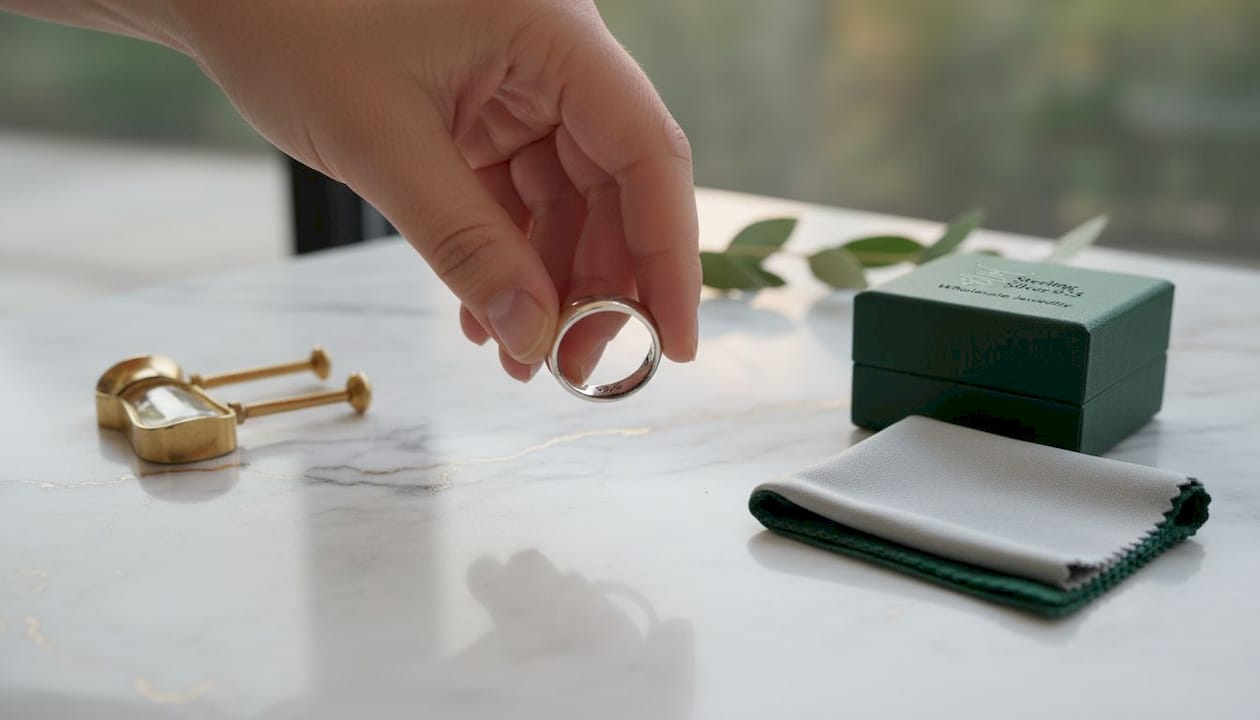
Now that we understand purity standards, let’s explore quick physical home tests you can perform to distinguish real silver jewelry.
Simple home tests to differentiate real silver jewelry
Home tests will not replace professional authentication, but they are useful for quick screening, especially when buying secondhand pieces or at markets. These four tests can be done with common household items.
-
The magnet test. Silver is non-magnetic. Hold a strong magnet near the piece. If it sticks strongly to a magnet, the jewelry likely contains a magnetic base metal such as iron or steel and is not solid silver. Note that a slight pull is normal if the clasp or finding is made from a different material.
-
The ice cube test. Silver has the highest thermal conductivity of any common metal. Place the jewelry flat on a table and set an ice cube on top of it. Real silver will begin melting the ice almost immediately, noticeably faster than placing the ice on glass or plastic. Physical tests for silver like this one take seconds and cost nothing.
-
The tarnish test. Real silver tarnishes when exposed to air and sulfur compounds. If a piece never tarnishes at all, it may be heavily coated or non-silver. Conversely, if it tarnishes very quickly and the tarnish layer is thick and uneven, that can indicate a silver-plated piece where the base metal is reacting through thin plating.
-
The cloth polish test. Take a clean white cloth and rub the jewelry firmly. Real sterling silver will leave black residue on the cloth. That black mark is silver oxide, a normal byproduct of silver oxidizing. No residue at all may suggest a coating rather than solid silver. Excessive black residue immediately might indicate tarnish from a reactive base metal bleeding through.
Pro Tip: Use the ice cube test in combination with the magnet test. A piece that passes both checks is more likely to be genuine, though still not confirmed. These tests eliminate the obvious fakes, not the sophisticated ones.
While home tests provide good initial clues, understanding the differences between solid silver and plated pieces requires closer inspection, covered next.
Distinguishing solid silver from silver-plated and fake jewelry
Understanding the difference between solid sterling silver and silver-plated jewelry is important when identifying genuine silver. Both can look identical to the naked eye in new condition. The differences become clear over time or under close inspection.
Solid sterling silver contains 92.5% silver throughout the entire piece. It wears evenly, develops a consistent patina over time, and generally feels heavier than a similarly sized plated piece.
Silver-plated jewelry has a base metal core, typically copper, brass, or nickel, with a thin silver coating applied through an electroplating process. Silver plating involves a thin silver layer over base metals like copper or brass, often identifiable by marks like “EPNS” or “A1.”
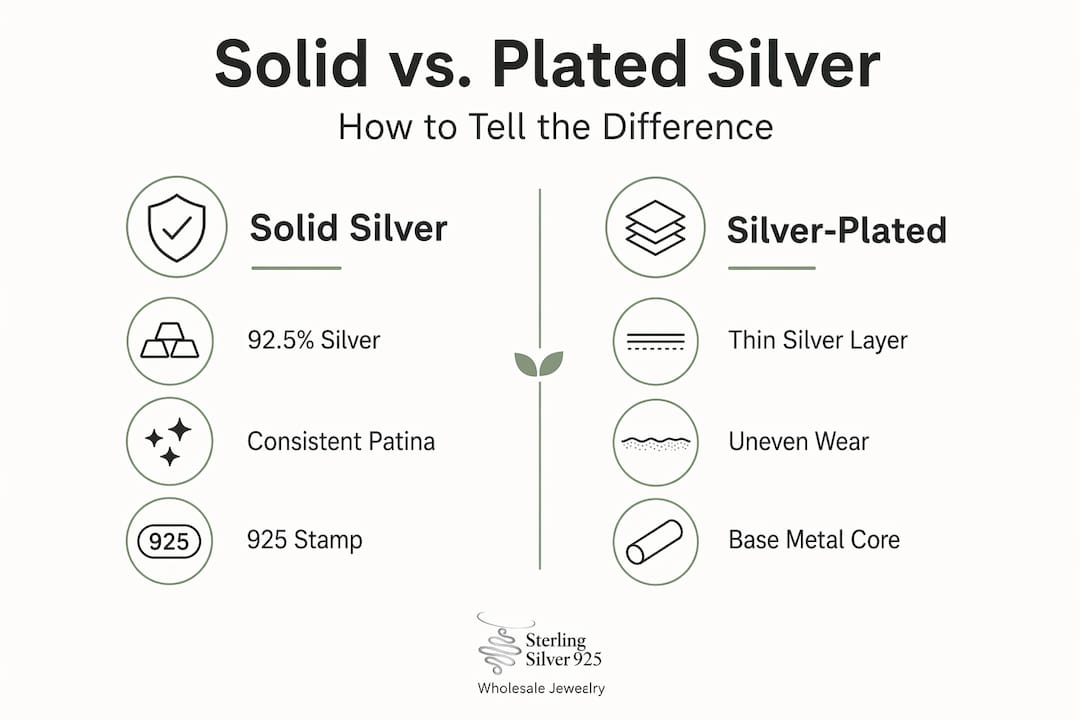
Here is a comparison to help you recognize differences quickly:
| Feature | Solid sterling silver | Silver-plated jewelry |
|---|---|---|
| Purity stamp | 925, STERLING, or Lion Passant | EPNS, A1, or no silver mark |
| Wear pattern | Even throughout | Reveals base metal at edges or high-friction spots |
| Weight | Heavier for its size | Lighter; base metal may be hollow |
| Tarnish | Consistent, polishes cleanly | May tarnish unevenly; base metal bleeds through |
| Price | Higher | Significantly lower |
| Coloring at worn areas | Same silver color | Yellow, red, or copper tones visible |
Look for wear on the edges of pendants, the inner band of rings, and the hinges of bracelets. These are the first spots where plating chips or wears away. An exposed yellow or reddish metal underneath is a reliable indicator of plating. Solid vs plated silver differences are most visible on older or well-worn pieces.
Additional visual warning signs:
- Soft, blurry lettering in the hallmark area (often a sign of a cast copy of a genuine piece)
- Mismatched patina where some areas are bright and others heavily tarnished
- A greenish tinge on the skin after wearing, indicating copper in the base metal reacting to sweat
Pro Tip: Ask sellers for the piece’s history or purchase documentation. Wholesale and retail sellers of genuine sterling silver will typically have product descriptions confirming 925 purity and will not hesitate to provide this information.
For more conclusive verification, professional testing methods provide clarity and confidence, discussed next.
Professional verification methods: XRF and acid testing
When significant money is involved, home tests are not enough. Two professional methods stand out for silver jewelry authentication: X-ray fluorescence (XRF) testing and acid testing.
XRF testing is currently the preferred method for non-destructive silver analysis. XRF can identify silver purity non-destructively within seconds, distinguishing sterling from other alloys. The device directs X-rays at the piece, which causes the metal to emit secondary X-rays specific to its elemental composition. The result is a detailed readout showing exact percentages of silver, copper, zinc, and any other metals present. No scratching, no chemicals, no damage.
Benefits of XRF testing:
- Results in under 30 seconds
- Identifies sterling silver (92.5%), fine silver (99.9%), and Britannia silver (95.84%) accurately
- Detects base metals hidden under heavy plating
- Produces a printed report for documentation
Acid testing is an older method that remains in common use among jewelers and appraisers. It requires scratching the surface of the piece against a black touchstone to deposit a small metal sample, then applying nitric acid to observe the color change. Acid testing is destructive and should be performed cautiously in inconspicuous areas or by professionals.
The color reaction indicates approximate silver content:
- Bright red: high silver content (fine or sterling)
- Darker red: lower silver content (800 or below)
- No reaction or green/brown: non-silver metal
Acid testing carries real risks. Nitric acid can permanently scar or pit the jewelry surface. Performed by an untrained hand, it can measurably reduce the value of an antique or collectible piece. Always have acid testing done by a certified jeweler or appraiser.
Professional silver testing methods, such as XRF analysis for confirmation of sterling purity, are increasingly available at jewelry stores, pawnshops, and appraisal services without requiring an appointment. Costs typically range from free to $25 per piece.
Pro Tip: For any silver purchase over $100, request XRF testing with a printed results report before completing the transaction. Many reputable sellers offer this as a standard service.
Common misconceptions and hidden truths about silver jewelry testing
Most buyers approach silver verification with two assumptions: that hallmarks are trustworthy and that a passed magnet test means genuine silver. Both assumptions have significant gaps.
Forged hallmarks are more common than most buyers expect. A counterfeit ring can have “925” stamped on it while containing almost no actual silver. The stamp takes seconds to add during production and costs nothing. This is not a rare edge case. It is frequent enough that hallmarks alone should never be the final word on silver jewelry authentication.
Home tests like the magnet check and ice melt provide helpful filtering. They eliminate obvious counterfeits made from iron or heavy plastic composites. But today’s sophisticated silver-plated pieces use non-magnetic base metals like copper and brass, which pass the magnet test easily while containing no silver at all. The ice test works on thermal conductivity differences, but a thick copper piece will conduct heat quickly enough to partially mimic silver’s performance.
The most dependable consumer-facing verification is professional XRF testing, which is non-destructive and can conclusively identify silver purity. Yet many buyers never request it, often because they assume sellers are trustworthy or because the testing feels like an overreaction for smaller purchases. That assumption costs buyers money regularly.
Acid testing has a separate problem. Many online guides recommend it as a straightforward DIY method. It is not. The chemicals involved are corrosive, the interpretation of color changes requires experience, and a wrong scratch location on a plated piece gives a false result. Acid testing done by an amateur on a valuable antique silver piece is how collectibles lose their provenance and surface integrity in a single afternoon.
The clearest takeaway: use home tests to screen, visual inspection to narrow down, and professional XRF testing to confirm. When purchasing vintage, high-value, or large quantities of silver jewelry, request a written results report. A seller confident in their product will provide it without objection.
Explore genuine sterling silver jewelry at Providence Wholesale Silver
Every piece in the Providence Wholesale Silver collection is stamped with the 925 hallmark, confirming genuine sterling silver content before it reaches the buyer. Quality control, consistent sourcing, and handcrafted construction are standard, not a selling point added after the fact.
Browse sterling silver mesh bracelets, twisted hoop earrings, and handcrafted 925 sterling silver bracelets with full product details and verified silver content. Each listing includes stamping information and material specifications so buyers can apply what they have learned here directly before purchasing. Wholesale and retail options available. No guesswork required.
Frequently asked questions
What does the ‘925’ stamp on silver jewelry mean?
The “925” stamp indicates the jewelry contains 92.5% pure silver, meeting the internationally recognized standard for sterling silver. It is the most reliable hallmark to look for when identifying genuine silver jewelry.
Can the magnet test alone confirm if silver jewelry is real?
No. While strong magnetic attraction indicates base metals and rules out solid silver, the magnet test cannot confirm authenticity because non-magnetic base metals like copper and brass also pass it, and some genuine silver pieces have small magnetic components like clasps.
Is acid testing safe for all silver jewelry?
No. Acid tests leave a scratch and are destructive by nature. They should only be performed by professionals or in inconspicuous spots, and they are not recommended for antique, decorative, or high-value pieces where surface integrity matters.
What is the most reliable method to verify genuine sterling silver jewelry?
XRF testing is non-destructive and provides an accurate elemental composition breakdown within seconds, making it the most reliable method for confirming sterling silver purity without risking damage to the jewelry.
How can I spot silver-plated jewelry instead of solid silver?
Look for markings like “EPNS” or “A1” which indicate electroplating rather than solid silver. Also check for wear at edges and high-friction points where the base metal shows through, and compare the weight against a solid silver piece of similar size.
Recommended
- 925 Silver open cuff bracelet highly polished – Providence Wholesale Silver
- Sterling silver mans AAAA grade cubic zirconia ring – Providence Wholesale Silver
- 925 Silver buckle vintage style ring – Providence Wholesale Silver
- Fine Jewelry Top Quality Gemstones Moissanite Cubic Zirconia Stamped S – Providence Wholesale Silver